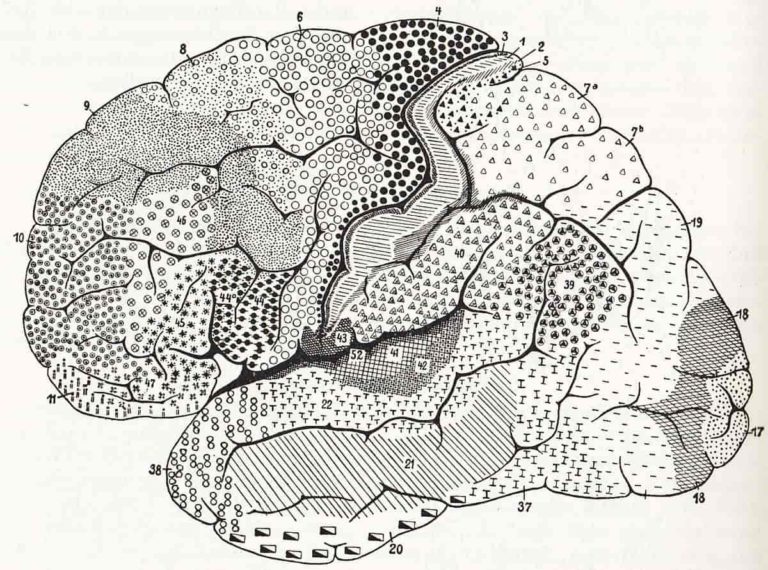

A story about personality
In the mid-19th century, there was a man named Phineas Gage (1823-1860) who worked as a railroad construction foreman in Vermont, USA. Phineas was known for his strong work ethic and his ability to handle explosives with great skill. However, little did he know that one fateful day would change his life forever and contribute to our understanding of the brain.
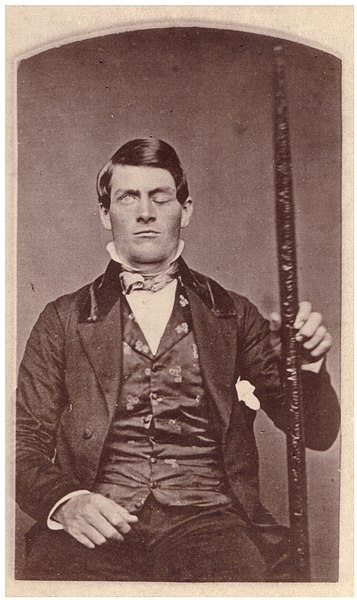
On September 13, 1848, Phineas was preparing a blasting hole by compacting dynamite with a tamping iron. Unfortunately, a spark ignited the explosive prematurely, causing the iron rod to shoot through his left cheek, pass behind his left eye, and exit through the top of his skull. Miraculously, Phineas survived this horrific accident, but his personality and behavior were dramatically altered.
Phineas Gage’s case caught the attention of the medical community, and his story was published in the prestigious New England Journal of Medicine. Doctors and scientists were fascinated by the profound changes in his behavior following the injury. Phineas, once known for his responsible and hardworking nature, became impulsive, irritable, and unreliable. He struggled to maintain relationships and hold down a job, which was a stark contrast to his previous self.
Around the same time, across the Atlantic in England, a Scottish neurologist named David Ferrier (1842-1928) was conducting groundbreaking animal studies to understand the functions of different areas of the brain. Ferrier’s experiments involved lesioning specific regions of animals‘ brains and observing the resulting behavioral changes. His work laid the foundation for our understanding of the brain’s functional organization.
Inspired by Phineas Gage’s case, Ferrier began to explore the connection between brain injuries and behavioral changes in animals. He conducted experiments where he selectively damaged certain brain regions in animals and observed the subsequent alterations in their behavior. Ferrier’s studies, combined with Gage’s case, provided valuable insights into the relationship between brain structure and function.
Phineas Gage’s story and David Ferrier’s animal studies became intertwined in the scientific community. Researchers started to draw parallels between Gage’s frontal lobe injury and the areas Ferrier had identified as crucial for personality and impulse control. Gage’s case served as a real-life example of how damage to specific brain regions could lead to profound behavioral changes.
The evaluation of personality changes in neuropsychology assesses an individual’s ability to plan, organize, initiate and monitor goal-oriented behavior. It evaluates higher-order cognitive processes that play a crucial role in solving problems, making decisions, and self-regulation. For identifying the most suitable instruments for a specific assessment, it is best to seek consultation with a qualified neuropsychologist.
https://www.thelancet.com/action/showPdf?pii=S0140-6736%2805%2971722-0